C is for Cool: Competitions, Evolution, Bono, Penguins & Positive Productivity!

I have the same problem with Cool as I did with Boring yesterday. So many things are cool – where would I begin? People with enquiring, open minds; people who aren’t scared to speak up against prejudice, even when it doesn’t affect them; parents who encourage their children to make decisions for themselves, instead of dictating their beliefs and aspirations – and provide them with the tools to do so. All very Cool.

Penguins, of course, live in cool places and are also inherently cool. Some have funky hairstyles, the Dad does his share of parenting and contrary to urban myth, they do not become so fixated on aeroplanes in the Falkland Islands that they fall over backwards while watching them, because they are far too cool for that.

View details

With all this abundance of coolness, I decided to simply share three of my Google Alerts that struck me as cool.

1) Competitions

Interesting creative writing competitions for children, particularly with good prizes, are relatively rare – but this one qualifies. Stroud Library are running a competition to celebrate the centenary of the birth of Laurie Lee, most famous for Cider with Rosie. I recommend Laurie Lee; if you haven’t read any of his work, shuffle off to the library right now. As I Walked Out One Midsummer Morning is a favourite of mine.

Laurie Lee

The theme of the competition is Legends set somewhere in the Five Valleys, where many of Laurie’s stories originated, and where he lived in the village of Slad.

There are two age categories for the competition:

  • Under 7s : 50-500 words
  • 8-12 years: 300-1,000 words

For each category the 1st prize will be £25 and a bundle of books and the 2nd prize will be £15, which is great, so if you know any young budding writers, point them in the direction of this page, where they can download an application form. The competition opens on 5th April and closes on the 31st May, and the webpage also has details of a workshop children can attend to help them get started on their masterpiece.

2)Evolution

Scientists have been looking afresh at the Permian-Triassic extinction that occurred around 252 million years ago . While they know that this event, which destroyed 90% percent of marine life and 70 % of terrestrial life, was caused by a disruption to the carbon cycle, the cause of the disruption has always been a mystery – although they knew that something ’caused a burst of carbon to come out of storage’, turning seas to acid and raising temperatures.

According to the Smithsonian website, geophysicist  Daniel Rothman and his team have noticed that the carbon cycle disruption  wasn’t typical of a geological event like a meteorite strike or volcano, where it would peak then taper off; instead the disruption seemed to grow at an increasing rate over time. So they’re hypothesising that microbes may be to blame – pesky microbes that may have traded genes. They believe that Methanosarcina gained two genes from a bacteria that gave them the ability to eat organic waste (with its stored carbon) from the sea floor, causing them to pump out methane and push carbon back into the water. You can read the full article here.

Methanosarcina

It makes you wonder what else microbes may have been responsible for…

3) Bono

Bono is (arguably) cool, but apparently the poor lad has writer’s block – which is seriously delaying progress on U2’s planned new album and follow up tour. CBC books thoughtfully provided 5 brief writing tips from authors that might help him on his way. You can read them all if you want, but I wanted to share  my favourite one:

“The secret of getting ahead is getting started. The secret of getting started is breaking your complex overwhelming tasks into small manageable tasks, and then starting on the first one.”

Mark Twain

Not only is this true, but it’s also the essence of a handy book by Simon Whaley, called The Positively Productive Writer, which explains in detail exactly how to  ‘break your complex overwhelming tasks into small manageable tasks’ and provides a host of useful and inspiring tips to get you started.
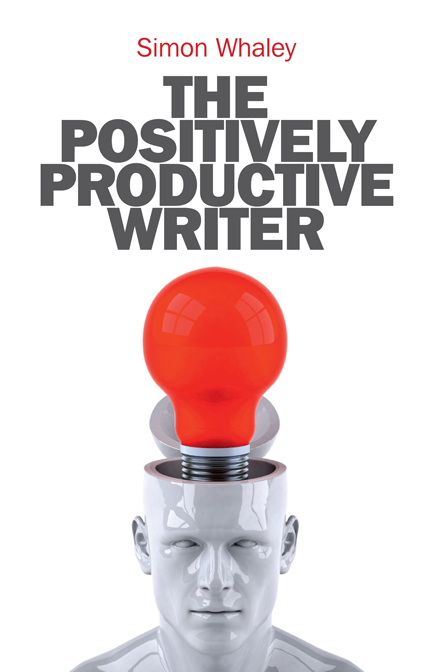
If you’re a writer who needs a constructive kick up the butt and a Plan, then read all about it here before hopping off and buying (or downloading) it. Perhaps I should send a link to Bono, too…

A is for Amazing: The Shell Grotto in Margate

Luckily, I didn’t need to rack my brains too hard for something amazing, because I came across something that fits the description just two days ago.

On Sunday myself, Mr IT, ArtyDaughter, ConstructoBoy and my Mum celebrated Mother’s Day with a trip to The Shell Grotto in Margate, Kent. It’s been on TV a few times and you may have seen it on George Clarke’s Amazing Spaces programme. It was featured in the 2012 Christmas Special which you can watch here on the Channel 4 website. So why does it qualify as Amazing?


Photo: Isobel Runham

Firstly, there’s the sheer scale of the achievement. The Grotto is 104ft long with a rotunda, a dome and a passage leading to a room nicknamed the altar chamber (sadly a WW2 bomb partially destroyed this area). As for the time it must have taken; wow. Every surface apart from the floor is covered with a variety of shells in intricate patterns, and there are a staggering 4.6 million shells remaining in situ, although some have become detached over time or have been stolen by souvenir hunters. The floor, which may have been decorated too and/or made of marble, has been removed at some stage and this has damaged the bottom of the walls.

Grotto section

Some sections have also been renovated over the years, though when and to what extent is unknown – which leads us to the second ‘Amazing’ qualification.

Nobody knows when, why or how the Grotto was constructed, or who by. Notice I don’t say ‘nobody knows for definite’, because researchers aren’t even anywhere near a definitive answer; the evidence is too scarce. There are a number of hypotheses, but the one that seems most likely is the one that’s probably hardest to prove.

The Grotto is Grade 1 listed and has been open to the public since 1838; restorations done before its opening and for many years after were poorly recorded or not noted at all. It was supposedly discovered in 1835, although even that date – and the circumstances of its discovery – aren’t rock solid. Was the Grotto discovered when house foundations were being dug? Was a small boy sent down the hole to investigate?

Grotto Altar Room

Before 1838 there are no recorded mentions, documents or maps relating to the Grotto. An 1821 map of Margate shows that the area above the Grotto as an open field, but not far from building expansion. Had people have been constructing something on this scale around this time (not to mention importing millions of diverse shells), surely someone would have noticed. It would have taken months, if not years, of work.

Was it built by the Knights Templar? Did a local aristocrat order it built? In a field they didn’t own, telling nobody and leaving no documentation behind? Did someone go to such extreme lengths to build it merely as a Victorian tourist attraction – and not bother to generate any publicity about it during construction? And if it had been recently constructed when it was (re)discovered, why did the people responsible not come forward and take the credit for a remarkable achievement? The iconography of the Grotto is also completely incompatible with Victorian follies and continental shell grottoes of the period.

After our visit – which filled my head with many more questions than answers! – I picked up a copy of ‘The Enigma of the Margate Shell Grotto’ in the gift shop. Published in 2011 by  Martyrs Field Publications, this is the most recent examination of the evidence. Patricia Jane Marsh discusses each of the Grotto construction theories, analysing them against a specific set of criteria. She makes no judgements herself, but her analysis does point to the Phoenicians as the most likely builders. The Phoenician Goddess Tanit may have given the Isle of Thanet its name, and the Phoenician God of the Underworld, Melqart, may have given Margate its name.

Patricia is a historian and linguist. Her discussion is enlightening and rigorous but also an accessible, fascinating read and I highly recommend it if you want to find out more. You can buy it directly from the publisher here.

The #LetBooksBeBooks Campaign; an Open Letter to The Book People

Today, with the might of well-known authors Philip Pullman, Malorie Blackman, Carol Ann Duffy, Joanne Harris and Victoria Lamb behind me, not to mention the huge coverage of @LetToysBeToys ‘LetBooksBeBooks campaign, I tweeted The Book People again about their stocking of gender-specific and sexist titles. Would they still ignore me, I asked, now that these well-known names were supporting the cause?

Very quickly they tweeted me back, thanking me for my feedback and asking me to email them at social@thebookpeople.co.uk. I thanked them for the invite, had some lunch and set to…

Hello Book People, and thanks for asking me to email you. I would love to have had this dialogue with you earlier, and did attempt it, but unfortunately it seems it took other people taking up the baton – particularly famous names like Malorie Blackman, Joanne Harris, Victoria Lamb (aka Jane Holland/Elizabeth Moss) and Carol Ann Duffy – to grab your attention. This makes me sad and a little cynical, but frankly anything that brings this important issue to your attention is worthwhile.
The concerns I’ve been tweeting you about for some time have now been neatly encapsulated by the @LetToysBeToys #LetBooksBeBooks campaign, and their petition can be found here. No – don’t click it yet! ? Hold on and I will explain to you why this is important to me –and why it should be important to you too.
Here we are in 2014; and what a journey it’s been. Over the last 100 years, voting rights for women, changes to employment law and of course the Equalities Act of 2010 have been markers on a journey that’s changed the social landscape of our country. Today, men and women have equal rights and equal choice – don’t they?? Nothing that is permitted for one gender is withheld from the other. I’m sure that at the Book People you have male and female staff, and that some of you are parents. How lucky your children are to be born in this era. Your sons know they can be nurses, and realise it’s a worthwhile profession all of its own; they don’t have to be doctors ‘instead’. Your daughters, on the other hand, are never asked if they want to be a nurse, but asked if they want to go into medicine or healthcare; because it’s made clear to them all the time that they can be doctors OR nurses, right? The choice is theirs. The choice is everyone’s.
Everything that a girl or boy could want is available in several colours, so that hopefully they can pick their favourite. It’s fine for boys to wear pink shirts and girls to wear camouflage trousers. Boys can like butterflies, flowers, rabbits and dolls. Girls can like astronauts, soldiers and skateboards and everyone buys them pirate and Buzz Lightyear costumes. Girls and boys both have similar expectations of the future: how far their career might progress, how their behaviour will be judged and how much of the domestic burden will fall on them. Boys and girls know that some Dads stay at home to care for their children, and that some Mums go back to work after having babies (and may be the biggest wage-earner in the house). They respect that. Hopefully they also know that some boys and girls have two mums, or two dads. And they respect that too.
My, what an idyllic world we live in! How far we’ve come!
Or have we? Unfortunately, it seem that this journey of ours towards equality has taken a little detour. In true Bugs Bunny style, someone’s dashed ahead and turned the sign round so that we’re now heading down Double Standards lane.
Although the majority of parents – including all of you there in the Book People office – would say that they want their sons and daughters to grow up feeling they can do anything, BE ANYTHING, what’s the reality? What do children see around them?
Daughters are told that women have equal rights. They watch as their bedroom fills with butterfly stickers, craft activities, baby dolls, pink accessories, toy vacuum cleaners and ovens – just in case they were foolish enough to believe what they were told, they and their expectations have been put firmly back in place by the time they’re five. Yep, by the time they’re at school, mentally those doors are already clanging shut. What they COULD do and what they expect to do are already two different things. Sons can choose caring professions, and should be involved fathers, they’re told… as their world becomes filled with macho, action-packed superheroes, soldiers, racing cars, pirates and astronauts, while domestic play equipment, dolls, animals and anything connected with caring or beauty is relegated to being weak and ‘for girls’ (because obviously those two go together). Not to mention that any liking for these ‘girls’ things’ might make people think – shock horror – that they’re gay. Best keep those impulses locked away… until the misery makes them another teenage suicide statistic.
Books have always reflected our world and sometimes, show us a better one. Their role in shaping children’s beliefs and expectations is every bit as vital as that of toys and other forms of media. The Equalities Act becomes just a piece of paper if we are not living our lives – and writing, designing and marketing our books – to support its principles and ensure our children can expect to live and be judged by them.
Girls need to know that pink is not the only colour – and to lose the expectation that everything pink is aimed at them. They need to open a book and be surprised by the contents, not already condemned to expect page upon page of butterflies, fairies, make-up tips and tales of princesses who got everything they wanted – once a guy showed up to sort out their life for them. Boys need to know that they are ALLOWED to like pink, and butterflies, and rabbits, and dolls. They don’t have to be an astronaut, builder, soldier or train driver, and they don’t have to live with the pressure of expecting to be the breadwinner, rescuer, knight on a white horse. They need to know that sometimes THEY will need rescuing – and that’s okay. If we adults do our job well, perhaps those boys will realise that the person who rescues them might be a girl; a girl with no make-up on, riding a Harley Davidson without a pink pony in sight.
If you want freedom of choice for your own children, and value their right to keep an open mind – and see only open doors in their future – then surely you want the same freedom for all children. So come on Book People, what do you say? You don’t need to stock gender-specific, sexist titles entitled ‘stories for girls’ or ‘cooking with mummy’. You could choose not to. You could be the first retailer (because we only have publishers so far) to make a stand and say no. I can assure you, with all the major newspapers reporting on this campaign and radio and TV taking an interest now too, if you make this stand today everyone will know about it by tomorrow. You will be Equality Heroes – and have the satisfaction of knowing that you used your power for good. Join us!

I Dabbled in a Drabble

Yes, I dabbled in a drabble. That is, a teensy tiny story. And it was fun.

One of my fellow #100kwords100days members, Gerald Hornsby, mentioned an anthology that was looking for sci-fi and fantasy stories just 100 words long. As I had a bit of time on my hands that day and submissions were about to close, I had a go.

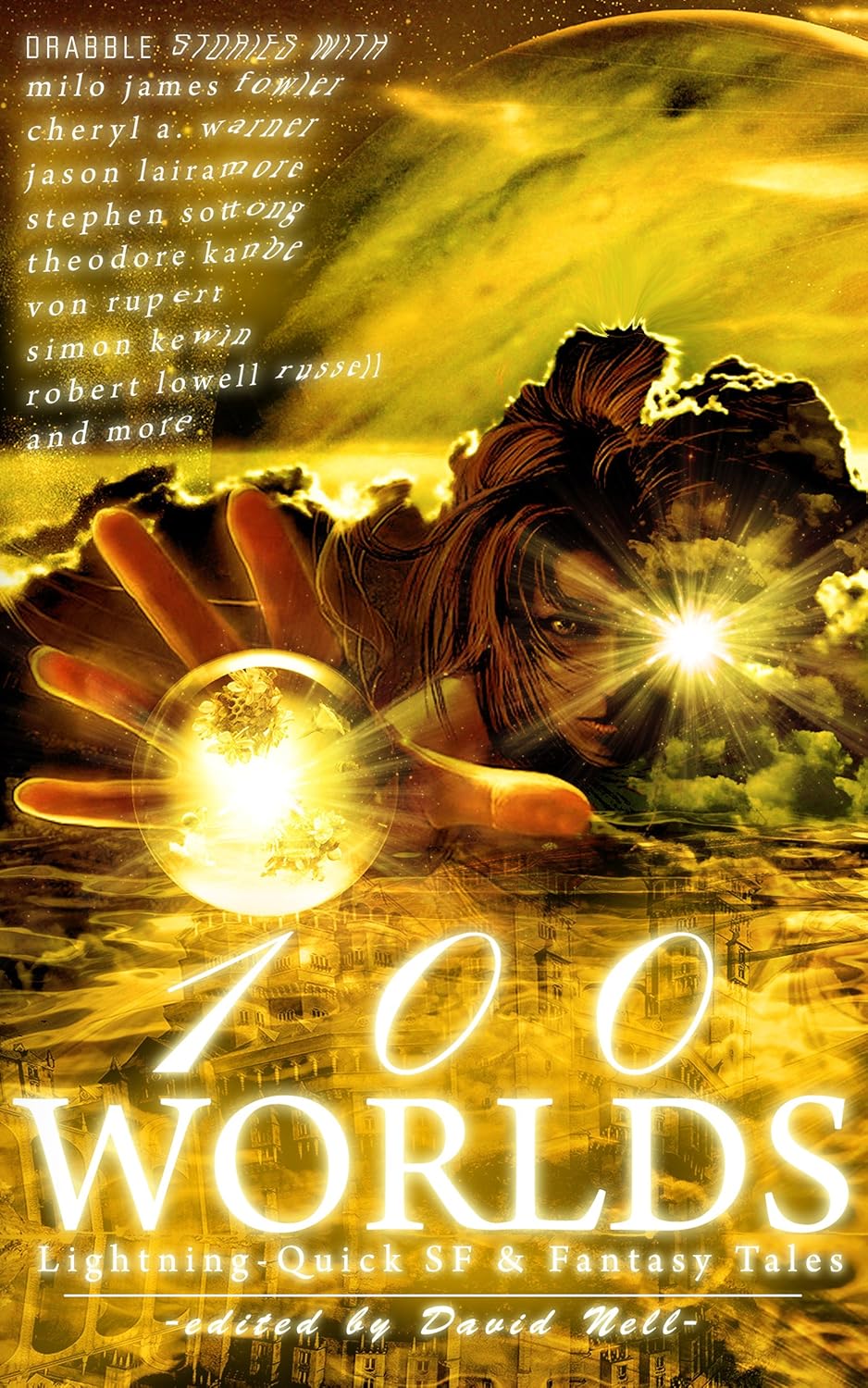
It’s amazing how much editing you can do on a 100 word story, which is ironic (you’ll see why in a minute). But I sent off my drabble, entitled Valhalla, and hey presto! it was accepted into 100 Worlds: Lightning-Quick SF and Fantasy Tales . I got the ebook for free but didn’t get a chance to look at it – anyway I fancied the paperback, which arrived today.

And after all that editing – I find that they’ve replaced a painstakingly positioned semi-colon with a comma,  changing the whole feel of the sentence. Oh, it’s a hard life…

Stopping Sexism Before It Starts

I am a relatively calm person. This is a good thing, because I’ve always had jobs where I’m public facing. I’ve stayed calm whilst being vomited over by poorly patients, spat at by children who have lost their ability to express their frustration in a more meaningful way, and whilst talking to parents who are cheerily telling me things that make my hand itch to grab the phone and call social services. And while otherwise lovely, intelligent people say things like ‘well we are being representative by having only white children on the cover. We only have white children here.’

But some things make my blood boil, and those things usually come under injustice, prejudice or wilful ignorance (and often all three). The picture below was retweeted by Letterbox Library, and ticked that ol’ blood boil trigger box straight away.

sexist bks

Why do I detest these horrible books from Scholastic? It goes far beyond the sickly pink cover on the one hand, featuring a skirt-wearing, cerise-tights-clad girl in front of a mirror, who looks like she’s been transported back in time a few decades, and the red cover with the grinning boy on the other, throwing his arms out energetically and surrounded by all-action exploding fireworks…

It’s not just me – is it? Which word leaps off the cover at you on the (can’t call it girl’s book, because Scholastic tell me it isn’t) – sickly pink book? Would it be ‘GORGEOUS’, by any chance, rendered as it is in capital letters in a font size five times that of the book’s equally disturbing subtitle, ‘Smart Ways to Look and Feel FABULOUS’? And could it be that the word that leaps out from the other book is ‘CLEVER‘? (Subtitle: Smart Ways to get SMARTER’. Er… smooth…). The girl is just laying on her front, waiting for life to happen, while the boy is grinning and full of pzazz.

By the way they are presented, and their use of colour, font size and picture, I feel these covers suggest that girls should be aspiring to be GORGEOUS (boys need not apply), while boys should have the ultimate goal of being CLEVER (so they can look after those girlies having a nice lay down). The more I looked at them, the more concerned I got. Particularly because Scholastic sell themselves as a responsible children’s publisher, and have now partnered with the Booktrust, who have a mission statement that seems to contradict all these books stand for (and who seem to have removed my comment about this on their site. They’re happy to keep my comment on mental health and the Books on prescription info I posted, but nothing critical, it seems :/ ) So I posted comments on Scholastic’s Parents FB page, Book Fairs page and Tweeted them too:

“So Scholastic claims it ‘recognises that literacy is the cornerstone of a child’s intellectual, personal and cultural growth’, and then publishes trash like this. Please join me in asking them to withdraw these disgustingly sexist books from their catalogue – unless you too think boys need a guide on being clever whilst girls just need one on being gorgeous.”

This attracted some attention.

“I really can’t believe that there are books like this out there – I do hope they withdraw them, young people don’t need this sexist twaddle!!” Hear Hear!

“The trouble this type of thing is how insidious it is. By having just the boy on the “clever” book it sends a message which people, of all ages don’t realise they are getting but it seeps in regardless.” Exactly!

I received no tweets back but got an identical reply from Scholastic on both their FB pages:

“Thanks for sharing your opinions on these titles. We understand your frustration regarding these titles and will be looking at changes to the book covers for any new editions. To clarify, While How to be Clever features a boy on the cover, this book is meant for all children and is written by a female author. The title How to be Gorgeous has a focus on how to be a strong, empowered, and confident young woman in today’s world. To view some of the content of these books, please visit and “Look Inside”. Again, thank you for posting!”

Ah, I see. A female author. THAT makes all the difference. Obviously a woman would never write or design anything remotely sexist! As for the rest of it… frankly it was patronising and I felt they were making it worse! And told them so.

“Thank you for your reply, but I’m sure you will admit that there aren’t many boys – wrongly or rightly – who will be picking up a pink book with one of the most insipidly unempowered-looking young ladies I’ve ever seen, featured on the front cover – particularly when it sells itself as a guide to looking ‘gorgeous’, and is, as you have admitted in your comment, focussed on how to be a strong, empowered, and confident young WOMAN’. All children need empowering; and if you really supported equality you would drag this concept into the 21st century, make ONE book, and realise that these differentiations are discriminatory in the first place. Tell a girl that because she’s a girl, she ‘needs’ ’empowering’, and she’ll presume she was weak in the first place. Then, through use of font and branding, make her believe the ultimate goal is to be gorgeous, and she will believe no other goals matter. And don’t get me wrong, my disapproval of the not-so-subtle insinuations perpetrated by the ‘boy’s’ book is equal. A word it seems Scholastic are not familiar with.”

In the meantime, the discussion had also attracted these two comments:

“I understand your point but my 6 year old daughter would pick up the clever book regardless of who it was geared to. Much of the sexism can be countered with a little additional guidance from the adults.”

“No offense to the above responders, but it’s up to US, as parents, to reinforce positive things into the minds of our children, unless you’re planning on relying on written word to do this for you. My advice: just don’t read the books. Just because they’re published, doesn’t mean that they’re suited for every child on the planet”

Hmm. Well, I appreciate that these people took the time to post and get involved, and I respect their opinions. The problem I have with the attitude that these comments share is that, firstly, Scholastic are adults. And like child protection, which is the responsibility of every adult in the UK, I believe fighting stereotyping, discrimination and prejudice should be the responsibility of all of us too. So here was my final word:

“They’re not suitable for ANY child on the planet. Inclusion means it’s up to EVERYONE – NOT just us, as parents, or as educators. Yes we can fight the battles; but maybe book publishers who give every appearance of being modern and inclusive in their mission statements, shouldn’t be giving us a reason to fight in the first place. I DON’T expect to rely on the written word to reinforce positive images; I DO expect the written word not to undermine them. Particularly when that written word is from a children’s publisher who very much claims to do otherwise.”

It will be interesting to see if Scholastic DO look “at changes to the book covers for any new editions:. Watch this space. And don’t get me wrong, Scholastic are nor the only culprits. I removed this ‘kindly donated’ book from the shelves at work before half-term, published by Priddy Books:

treasure girls bk

Slightly less offensive, but still stereotype central… the fight goes on! 😀


Guest Post: Melissa McPhail – My Take On Magic Systems

Officially the blog tour has finished, but to round off the week here is a guest post by Melissa McPhail, talking about magic systems in fantasy and how she devised the one she uses in Cephrael’s Hand. Then read on to learn how you can win huge prizes as part of this blog tour, including a Kindle Fire, $450 in Amazon gift cards, and 5 autographed copies of the book.

My Take on Magic Systems

A guest post by Melissa McPhail


One of the most enticing aspects of writing fantasy is developing a magic system. The author’s magic system is inextricably woven into their world and contributes greatly to the reader’s vision of the world overall. The way a system is created either makes the world seem real or unreal, depending on how well the author has grounded the system with laws and limitations.

For example, scientists in our own world have defined laws—inertia, gravity, the periodic table—that describe the physical limitations and properties of energy. We don’t expect a stone to rise upwards when we throw it, but we might believe it could float if it were somehow made of helium. Likewise in a fantasy world, it’s important to codify the system with laws and rules (and to stick to those rules once established), to set boundaries for what the magician can and cannot do with magic, and to establish consequences for and ramifications of magical misuse.

This all shows that magic systems require significant thought and research on the author’s part to develop realistically. Yet for all of this, the manner in which one might design and describe the magical process is potentially limitless—there are as many magical systems as there are fantasy novels, and equally as many readers eager to pontificate on their pros and cons and/or to organize the systems into categories and types.

The one thing most magic systems have in common, however, is that they all handle energy. Whether that energy is spiritual, omnipotent, corporeal, or derives from physical objects or living things, the working of arcane arts surrounds the manipulation of energy.

I designed the magic in Cephrael’s Hand based on scientists’ existing understanding of electrical fields. The process of thought has been scientifically proven to produce energy, and human bodies are known to generate electrical fields. For the magic in Alorin, I proposed that all living things produce a metaphysical energy which is formless but which flows across the world in natural currents. This energy is called elae. This is the energy a magician of Alorin uses to produce arcane workings. How he does this is the creative part.

In Cephrael’s Hand, all things are formed of patterns. A single leaf derives its pattern from the larger pattern of its motherly oak. The snowflake harbors the pattern of a storm. Rivers form patterns that mimic the pattern of the world, and a living man harbors within him the pattern of his immortality. These inherent patterns collect and compel energy (elae) toward a certain purpose—growth, action, states of change.

To compel energy, a magician of Alorin (called a wielder) must learn to first identify and then usurp control over the pattern of a thing in order to command it. This is a laborious process requiring a lifetime of study.

Unlike wielders, the Adepts in Cephrael’s Hand are born with the ability to manipulate certain patterns. Adept Healers can see creation patterns (life patterns) and mend them where they’ve become frayed. Truthreaders can hear certain thoughts and read minds to see what a man saw versus what he says he saw. Nodefinders have the ability to move long distances with a single step by traveling on the pattern of the world. And Wildlings tap into a variant aspect of the lifeforce called elae to shapeshift or even skip through time, among other intriguing talents. The last type of Adept can sense the patterns of nonliving things—stone, air, water, fire, etc.—and use those patterns to compel the elements themselves.

Adepts are limited by nature of their birth—they can only inherently work one category of patterns. They are limited by their training, their inherent intelligence, talent and ability. And of course, like us in real life, they are limited by their own vision of their capabilities.

Above all of these limitations, we find Adepts limited by “Balance.” The concept of Balance draws from my studies of Eastern philosophies. It is the high governing force, the yen and yang, karma, cause and effect, fate. It’s as esoteric and arcane as these concepts imply. How far can the Balance be pushed in one direction without lashing back at the wielder? Which actions stretch it and which ones defy it? Balance is a complex and complicated subject—as difficult to define as our own world’s myriad competing religions. The only real agreement on the subject of Balance is that all magical workings stretch the Balance to some degree. Understanding how far they can be stretched without snapping is central to survival in the arcane arts.

The concept of Balance provides, well, the “balancing” force to all magical workings in Cephrael’s Hand and is central to its plot. You see, the entire realm of Alorin is out of Balance and magic is dying—and the Adept race dies along with it.


Cephrael Tour BadgeAs part of this special promotional extravaganza sponsored by Novel Publicity, the price of the Cephrael’s Hand eBook edition is just 99 cents this week. What’s more, by purchasing this fantastic book at an incredibly low price, you can enter to win many awesome prizes.

The prizes include a Kindle Fire, $450 in Amazon gift cards, and 5 autographed copies of the book.

All the info you need to win one of these amazing prizes is RIGHT HERE. Remember, winning is as easy as clicking a button or leaving a blog comment–easy to enter; easy to win!

To win the prizes:

  1. Purchase your copy of Cephrael’s Hand for just 99 cents
  2. Enter the Rafflecopter contest on Novel Publicity
  3. Visit today’s featured social media event

About Cephrael’s Hand: Two brothers find themselves on opposite sides of a great battle, neither knowing the other is alive… A traitor works in exile while preparing for the disaster only he knows is coming… A race of beings from beyond the fringe of the universe begin unmaking the world from within… And all across the land, magic is dying. Cephrael’s Hand is the first novel in the award-winning series A Pattern of Shadow and Light. Get it on Amazon or Barnes & Noble.

About the author: Melissa McPhail is a classically trained pianist, violinist and composer, a Vinyasa yoga instructor, and an avid Fantasy reader. She lives in the Pacific Northwest with her husband, their twin daughters and two very large cats. Visit Melissa on her website, Twitter, Facebook, or GoodReads.