The Perfect Mother’s Day Gift

What do you buy your Mum for Mother’s Day when she’s a writer? It turns out that my children have a fairly good idea.

Mothers Day 1Chocolates and a notebook!

Hmm. Yummy sustenance and that writer essential, the notebook.
But not any old notebook. This one’s special.

For a start, my daughter handmade it.


Mother's Day3

Mothers Day2


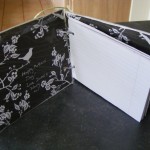
This is how it looks inside – gorgeous, isn’t it?


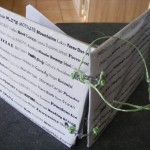
And even better, because my daughter knows me so well, on the outside it has two rather natty features.The cover consists entirely of random words for inspiration, AND – and this bit is the genius – it has a hook attached so that it can hang beside the toilet. Seriously. Because I am always bemoaning the fact that the minute I sit on the loo, I have inspiring thoughts, which my husband puts down to the fact that when I’m on the loo my brain mellows out because it knows I can’t be doing anything else at the same time. Of course now I need to attach a pen too!

MothersDay 4

 GENIUS. Thanks kids 🙂 x

Whipping Your WIPs into Submission, OR ‘Fifty Shades of Completion’

Over on the Facebook Group for the 100k in 100Days Challenge, we don’t only talk about writing 100K words in 100 days. I know: it’s a shocker. We do mainly talk about writing, so if that doesn’t appeal, don’t join. Because it will bore you to tears, and life’s too short, even on a Grey day.

One of our recent natters intellectual debates was about languishing WIPS (works in  progress, lovies. You’re new here, aren’t you? Welcome :D).
Why do we have them? How many do we have? Will we/should we, ever finish some/most/all of them? After I suggested that performing a personal WIP audit could be useful,  suddenly the thread morphed into a secular online Confessional. Dozens of WIPs were admitted. The sin of Never Finishing any work above ‘short story length’ (a Grey area) was confessed (if this was a Vlog, you’d see me raising my hand here. As it isn’t, use your imagination). Some WIPs supposedly started when their authors were living in trees writing with a scratchy stick, but that was probably an exaggeration. Flamin’ writers.

Many of us felt we had at least a few WIPs worth retrieving from the Grey recesses of our archives – worth reviving or even completely rewriting, because the original idea was sound. How to do this logically, though, and how to balance the demands of ancient WIPs with the urge to start new stuff – that’s tricky. Or is it?As I’m all for giving an approving nod to other writers and their ideas, and this confessional mode is hard to get  out of, I’ll tell you now that if you need help with this, How To Finish What You Start – A Five Step Plan For Writersmay be all you need to tackle this Grey area.

BUT if the Five Step Plan seems too harsh, and not to have that holding-your-hand-and-guiding-you-gently-through-the-thicket-of-thorns-to-the-rainbow-rose-garden approach that you prefer, you might need my Fifty Steps Of Completion plan (except there are only fifteen) to Whip those Whips into Submission, instead. And no, I didn’t call it that to get hits from people seeking certain volumes of erotic fiction, it just came to me (no double entendre intended). If that’s what I was after, I would have mentioned E.L.James and slipped in the word Grey everywhere. (Oh… whoops.) Without Further Ado, I give you…

Whip

Fifteen Shades of Completion: Whipping Your WIPs into Submission.

Get a notepad ready – you’ll need it in a minute. (Yes, and a pen as well. Smarty Pants).

  1. Dig out every notebook and scrap of paper with writing on that you possess (yes, that includes shopping lists. What do they tell you about the person who wrote it, or what they’re about to do? They make great prompts!). Put them in one place: a boxfile if they fit, a bedroom if they don’t (displace the occupant. It’s for the Greater Good). Label your boxfile/bedroom WIPs.
  2. Search tirelessly through documents, blog posts, Sticky Notes, files from MyNovel/Scrivener/NewNovelist etc for writing. Save in one folder: WIPs.
  3. Time to separate your WIPs from your PIPs. PIPs are Ponderings in Progress. Snatches of dialogue, interesting info, undeveloped ideas; any pieces  less than about 5% of the intended finished length,  count as PIPs.
  4. Gather PIPs together in one computer folder and/or notebook, scrapbook, expanding/lever-arch/box file. If there’s a related cutting, join your PIP to it: staple, paper clip, or stick them on the same scrapbook page. Then, when you need a new idea (maybe you ran out of  WIPS; woo-hoo!) – all those brilliant seeds will be just waiting for you to come along and water them.
  5. FILE your PIPs, Make Way For Your WIPs! Label then store your PIPs.
  6. Only true WIPs left – got your notepad? LIST and number each one. No categorising, no comments, no ordering; just list. If it doesn’t  have a title, assign one that clearly identifies it, e.g. 1. Watch The Wall 2. Ghost sport story.
  7. Go down the list. Star WIPs that excite you/give you a warm fuzzy feeling.
  8. Again! This time star WIPs when you think, ‘I know what I’m doing with that.’
  9. Again! This time star WIPs when you think, ‘I could finish that fairly quickly.’
  10. Again! This time, star WIPs when you think, ‘I already have a competition/ submission/other purpose in mind for that one, that has a deadline attached.’ If the deadline is in the near future, give it two stars.
  11. You may feel that there’s one kind of project that you never complete, whether (like me!) it’s longer projects, non-fiction, flash…so brandish that pen again and star projects that fall into your ‘always left to last’ category.
  12. If your list contains items without any stars, take a good long look at them. Are there any that you feel you will never want to work on again? Now’s the time to heartlessly slash through those items.
  13. Hopefully by now you will have a short list of starred items – with any luck some will have more than one star. Your stars should enable you to write out a prioritised WIP list.
  14. What you need now is a PLAN. A rule that works for you, to ensure your WIP list is tackled whilst writing new stuff. Now you could go cold turkey – as recommended by the 5 step Plan – and ban yourself from writing anything new at all. By all means do this is you can, although remember to at least briefly write down any ideas in your PIPs book! But this won’t work for many people, who need to write new material because they have commitments to do so and/or need to write to earn money; or who find just revitalising old material feels stifling, making them lose heart.
  15. So if you can’t go cold turkey, what are your options? Here are some rules I suggested to Gerald Hornsby on the 100K group (he took up my audit suggestion and ended up logging a bewildering amount of languishing WIPs!).
  • ‘for every two new ideas I write up, I must finish 1 WIP’
  • ‘for every 2000 words I write on something brand new, I must write X amount on a WIP’,
  • ‘I will complete a WIP every two months’.

For any of these to work, it’s best to make a spreadsheet or some kind of record, to keep yourself honest, AND on track. Hope that’s cleared up any GREY areas 😉

Go on – DIG OUT THOSE WIPS AND MAKE IT HAPPEN! Good luck 😀


Stopping Sexism Before It Starts

I am a relatively calm person. This is a good thing, because I’ve always had jobs where I’m public facing. I’ve stayed calm whilst being vomited over by poorly patients, spat at by children who have lost their ability to express their frustration in a more meaningful way, and whilst talking to parents who are cheerily telling me things that make my hand itch to grab the phone and call social services. And while otherwise lovely, intelligent people say things like ‘well we are being representative by having only white children on the cover. We only have white children here.’

But some things make my blood boil, and those things usually come under injustice, prejudice or wilful ignorance (and often all three). The picture below was retweeted by Letterbox Library, and ticked that ol’ blood boil trigger box straight away.

sexist bks

Why do I detest these horrible books from Scholastic? It goes far beyond the sickly pink cover on the one hand, featuring a skirt-wearing, cerise-tights-clad girl in front of a mirror, who looks like she’s been transported back in time a few decades, and the red cover with the grinning boy on the other, throwing his arms out energetically and surrounded by all-action exploding fireworks…

It’s not just me – is it? Which word leaps off the cover at you on the (can’t call it girl’s book, because Scholastic tell me it isn’t) – sickly pink book? Would it be ‘GORGEOUS’, by any chance, rendered as it is in capital letters in a font size five times that of the book’s equally disturbing subtitle, ‘Smart Ways to Look and Feel FABULOUS’? And could it be that the word that leaps out from the other book is ‘CLEVER‘? (Subtitle: Smart Ways to get SMARTER’. Er… smooth…). The girl is just laying on her front, waiting for life to happen, while the boy is grinning and full of pzazz.

By the way they are presented, and their use of colour, font size and picture, I feel these covers suggest that girls should be aspiring to be GORGEOUS (boys need not apply), while boys should have the ultimate goal of being CLEVER (so they can look after those girlies having a nice lay down). The more I looked at them, the more concerned I got. Particularly because Scholastic sell themselves as a responsible children’s publisher, and have now partnered with the Booktrust, who have a mission statement that seems to contradict all these books stand for (and who seem to have removed my comment about this on their site. They’re happy to keep my comment on mental health and the Books on prescription info I posted, but nothing critical, it seems :/ ) So I posted comments on Scholastic’s Parents FB page, Book Fairs page and Tweeted them too:

“So Scholastic claims it ‘recognises that literacy is the cornerstone of a child’s intellectual, personal and cultural growth’, and then publishes trash like this. Please join me in asking them to withdraw these disgustingly sexist books from their catalogue – unless you too think boys need a guide on being clever whilst girls just need one on being gorgeous.”

This attracted some attention.

“I really can’t believe that there are books like this out there – I do hope they withdraw them, young people don’t need this sexist twaddle!!” Hear Hear!

“The trouble this type of thing is how insidious it is. By having just the boy on the “clever” book it sends a message which people, of all ages don’t realise they are getting but it seeps in regardless.” Exactly!

I received no tweets back but got an identical reply from Scholastic on both their FB pages:

“Thanks for sharing your opinions on these titles. We understand your frustration regarding these titles and will be looking at changes to the book covers for any new editions. To clarify, While How to be Clever features a boy on the cover, this book is meant for all children and is written by a female author. The title How to be Gorgeous has a focus on how to be a strong, empowered, and confident young woman in today’s world. To view some of the content of these books, please visit and “Look Inside”. Again, thank you for posting!”

Ah, I see. A female author. THAT makes all the difference. Obviously a woman would never write or design anything remotely sexist! As for the rest of it… frankly it was patronising and I felt they were making it worse! And told them so.

“Thank you for your reply, but I’m sure you will admit that there aren’t many boys – wrongly or rightly – who will be picking up a pink book with one of the most insipidly unempowered-looking young ladies I’ve ever seen, featured on the front cover – particularly when it sells itself as a guide to looking ‘gorgeous’, and is, as you have admitted in your comment, focussed on how to be a strong, empowered, and confident young WOMAN’. All children need empowering; and if you really supported equality you would drag this concept into the 21st century, make ONE book, and realise that these differentiations are discriminatory in the first place. Tell a girl that because she’s a girl, she ‘needs’ ’empowering’, and she’ll presume she was weak in the first place. Then, through use of font and branding, make her believe the ultimate goal is to be gorgeous, and she will believe no other goals matter. And don’t get me wrong, my disapproval of the not-so-subtle insinuations perpetrated by the ‘boy’s’ book is equal. A word it seems Scholastic are not familiar with.”

In the meantime, the discussion had also attracted these two comments:

“I understand your point but my 6 year old daughter would pick up the clever book regardless of who it was geared to. Much of the sexism can be countered with a little additional guidance from the adults.”

“No offense to the above responders, but it’s up to US, as parents, to reinforce positive things into the minds of our children, unless you’re planning on relying on written word to do this for you. My advice: just don’t read the books. Just because they’re published, doesn’t mean that they’re suited for every child on the planet”

Hmm. Well, I appreciate that these people took the time to post and get involved, and I respect their opinions. The problem I have with the attitude that these comments share is that, firstly, Scholastic are adults. And like child protection, which is the responsibility of every adult in the UK, I believe fighting stereotyping, discrimination and prejudice should be the responsibility of all of us too. So here was my final word:

“They’re not suitable for ANY child on the planet. Inclusion means it’s up to EVERYONE – NOT just us, as parents, or as educators. Yes we can fight the battles; but maybe book publishers who give every appearance of being modern and inclusive in their mission statements, shouldn’t be giving us a reason to fight in the first place. I DON’T expect to rely on the written word to reinforce positive images; I DO expect the written word not to undermine them. Particularly when that written word is from a children’s publisher who very much claims to do otherwise.”

It will be interesting to see if Scholastic DO look “at changes to the book covers for any new editions:. Watch this space. And don’t get me wrong, Scholastic are nor the only culprits. I removed this ‘kindly donated’ book from the shelves at work before half-term, published by Priddy Books:

treasure girls bk

Slightly less offensive, but still stereotype central… the fight goes on! 😀


Sorting Out Your Sub-Plot: Part 1 – What The Butler Did

Scared Smiley

Plot can be a bit of a scary word. Hence all those famous writerly sayings.

You know – ‘Plot me no Plots’, ‘Out, vile plot!’, ‘Is this a plot I see before me?’, ‘Will no one rid me of this turbulent plot?’, ‘It was the best of plots, it was the worst of plots’ and of course the infamous ‘When shall three plots meet again? In thunder, ligh-‘ well, you get the concept. (Ok, I made the last one up. It is of course a parody of Terry Pratchett’s ‘When shall we three meet again?’  ‘Well, I can do next Tuesday…’)  *waits for torrent of abuse from Shakespeare fans who think irony means ‘how clothes look when you’ve put that hot flat thing over them’*

I digress (constantly. It’s a writer thing). The point is, plot is a bit of an obsession if you’re a writer. Is it strong enough? Does it fit the theme? Aren’t they kind of the same thing? But no – you’ve read that plot grows from theme. You’ve read theme grows from plot, too! Eeek – now you’ve read that plot grows from characters! But surely characters come from plot? No good having a Special Forces sniper, then plotting a regency romance! Hold on – what’s this: a plot is a set of events linked by causality. Er – what’s that? What are plot holes and where are yours? Is your plot believable? pen on notebookWould Mrs Tiggins-Mapleleaf really commit suicide in the jacuzzi just because she discovered her layabout husband, Fortescue Tiggins-Mapleleaf, in a state of undress with the butler in the library? (Maybe not – unless, ooh, unless she didn’t give a stuff about Mr T-M, but had yearned for the butler for ages! Where’s my notebook… jacuzzi, butler… library, yearnings… there. I’m back in the room.)

Then, just to scare the socks off you (your pants are gone already, fleeing at the mere mention of ‘causality’), someone asks what your sub-plot is. 

You explain that none of the action is under the sea; have they not read your magnificent synopsis? The novel’s a regency romance set in Derbyshire. They look at you blankly. You squirm and try again. There are no popular high street chain design-your-own-sandwich establishments in it either. You clear your throat nervously, and add that you don’t think there was such a phenomenon in regency Derbyshire. Was there?
They still look blank and you realise it’s time to admit you don’t know what the hell a sub-plot is; now, before you run out of a) ideas that begin with sub b) self-respect.

If that’s you, fear not. Over the next few posts I will attempt to put my Diploma head on, the one that’s meant to understand this stuff; nick quotes from other writers that explain it better than me; and generally Reveal All about sub-plots.

For now, we’ll just establish what a sub-plot is.
Firstly, like a plot, a sub-plot is a series of events ordered by causality. If the term ‘causality’ is unfamiliar to you, think of it as ‘with a cause’; each event like a falling domino in a line. (Remember the domino metaphor, because we’ll come back to that in future posts). Still not clear? Enter Mrs Tiggins-Mapleleaf, stage right:

brandies,brandy snifters,cigars,glasses,libraries,library,males,men,people,persons,stogies,stogy

Mr T-M doesn’t show his wife affection because he is secretly gay causing
Mrs T-M to look elsewhere for affection and develop a crush on the butler, AND Mr T-M to develop a crush on the butlercausing…
Mr T-M to reveal his feelings and get the butler in a passionate clinch in the library, unfortunately witnessed by Mrs T-M, causing...
Mrs T-M to feel betrayed and despair of finding lasting happiness, causing…
Mrs T-M to commit suicide in the jacuzzi, causing…
Mr T-M to leap in to save her, causing…
Mr T-M to fail – but hit his head and drown in the attempt!, causing…
The butler to inherit the huge estate and erect a memorial to them both, also mounting an international campaign for increased jacuzzi safety measures, causing…
him to meet a lovely bloke named Jeff at the Jersey Jacuzzi Conference and live happily ever after.

Obviously if you wish to steal this stonker of a plot, get in touch and we’ll discuss terms. It’s not often I let a gem like that out on public view, but I like to think I’m part of a supportive writing community. *yes, the clothes do look flat, don’t they*

Secondly, a sub-plot is a secondary plot – less important than the main plot. You would expect it to ‘occupy’ less of the text. Some sub-plots interact hugely with the main plot; some barely at all. It depends on the effect the author want to achieve, and the nature or genre of the story. Which brings us on to:
What Can A Sub-Plot Do For Me, And Do I Need One? But we’ll think about that next time.


My #100kwords100days and Other Challenges, OR, Why Do We Do It?

Everybody has heard of NaNoWriMo, haven’t they?

writer cat

Chances are, your aunt’s neighbour’s cat is sitting in his basket right now, licking the end of his fountain pen and making notes on his kitty blanket for November 1st, because this year he gonna be prepared, damn it.

We’ve all heard of the Kindle, too, but Other E-readers Are Available. Well so are other writing challenges. Currently insane self, and at least 361 other writers who should know better, are taking part in #100kwords100days. Organised by the lovely Sally Quilford, the title’s self-explanatory, and I say ‘at least 361’ because that’s just the writers who have joined the Facebook group.

relaxed dog

100k badge

Obviously 100,000 words in 100 days is a more achievable than NaNo’s 50k words in 30 days.

What’s that? 100k in 100 days is too easy? Hmm, well, if you want to go to the other extreme…

For those who can put everything aside for an entire weekend – and I mean everything; either book yourself into a hotel room, or bind and gag every living thing within 20 metres – there’s NaNoWriWee. The brainchild of writers on The Kernel magazine, NaNoWriWee requires you to write 50k in a weekend. Yep, you heard me. Two 15 hour writing days. I’m guessing they named it NaNoWriWee because weeing is precisely what you won’t have time for. So perhaps book a home help, a colostomy bag and a catheter whilst you’re at it.  It sounds crazy but people are signing up. Hell, I’m even considering it. And seriously tempted by the hotel room option.

So why do we do it? What IS the magic lure of the writing challenge – and are there any downsides? Who better to ask than my fellow 100k100dayers…

“For me it’s the daily accountability,” Sarah Little says. “Many’s the evening the past week where my last half hour is scribbling out words just so I know I’ve done *something* for the day, whereas usually I’d have the excuse of ‘too tired’.” Gemma Noon agrees. “It makes me write. I have someone other than myself to be accountable to.” This pace-pushing has a great side-effect for Paula Martin. “It helps me ignore the inner editor that usually slows me down. I always spend ages revising, anyway, so this kind of challenge helps me get the words down, ready to revise later.” “It helps keep me on pace and working towards a goal, and on largely one thing rather than a lot of random little things.” says David Sorger, and this is something Tracy Enright finds a definite plus point;  “it makes me focus on one piece rather than flitting around like a butterfly brain. I get a real sense of achievement when I meet the target.” Ahh.. targets. But can’t targets be scary?

Apparently not. It’s the targets in these challenges that drag writers forward – and drags the work out of us.  ” NaNo makes me write – come what may! I have a ridiculously busy job and a family so it makes me focus, and I have three 70k novels because of it,” says Phoebe Randerson. And word meters hold no fears for Gemma Noon! “I like stats. I like having a target to work towards and I like knowing that I am making tangible progress.” Awen Thorber confesses: “I’m a deadline girl… I’ve procrastinated for years about writing my novels and thanks to NaNoWriMo I finally have the bulk of one done… and thanks to 100k I now have plots for more novels, research for one, and many thousands of words towards a few other novels. Challenges are my push to succeed and along the way I have found like minded friends and support that I wouldn’t have found on my own.

The support of others is something everyone pointed to as a pro. “There is an incredibly supportive network both on line and at write ins and I feel very motivated at the end of it,” says Tracy Enright. Tracy was the only person to voice a downside of writing challenges, although it’s certainly one that many writers (me included!) can relate to – “I’ve found other work tends to get left by the wayside, I go short of sleep and the kids get more quick meals!

David Sorger told me he’s been “enjoying the camaraderie and encouragement from my fellow writers and group members. It’s really motivated me to keep up at a thousand word a day pace.” It’s not only motivation that makes companionship important during the challenge though: “it is having people who will encourage me and share their experiences. It makes the whole process less lonely, ” Gemma Noon told me, and it’s this support Vikki Thompson feels is vital. “For me, the thing about writing challenges is knowing you’re not alone. That other people are trying to do the same thing, suffering the same fears, concerns, highs and lows of the challenge.

Group

Hmm. This all sounds rather warm and fuzzy… almost, gulp, noble… oh come on! Am I the only one who thinks we night all be a bit nuts? No, I’m not. “Until NaNo, I’d thought of writing as such a solitary pursuit,” says Sarah Little. “It was fab to find out there was a huge bunch of like-minded loons!” Er, thanks, Sarah, for proving my point. I think…


In Which I Admit That Alex Gazzola @HealthJourno And @Simon Whaley might have a point :)

Confession time.

With fiction, I feel I know what I’m doing. Roughly. I have a uni Diploma in creative writing. I’ve had a small amount of fiction success. So hopefully I understand the principles of telling a good yarn, even if, like all writers, it takes me a few rewrites to sieve out the grit and get to the gold. And non fiction shouldn’t be a problem, should it? My OU education tutor, very well-respected and much published, urged me to do a Masters because he felt I wrote well at that level. I happily chunter on in my monthly column about preschool happenings in the village mag, and had a history article accepted by a Huntingdonshire magazine editor (she never ended up publishing it, mind, or commissioning the series she wanted me to do, but that’s another story).

MC900436368

But here’s my CONFESSION: generally, as far as non-fiction goes, I’m a bit scared. I’ve always felt I’m not worthy. Yes, I’ve dabbled in a few careers, but never risen to any professional prominence in them; I have hobbies, but haven’t pursued anything obsessively. I don’t even OWN an anorak. So why would anyone want me to write about education, childcare, inclusive practice, equality and diversity, history, medicines, children’s literature, books, or the genius that is Stargate in all its permutations, when there are hundreds of people out there more qualified than me?

I’ve read advice about writing non-fiction in magazines articles and on the blogs of writers like Simon Whaley and Alex Gazzola. I’ve learnt about finding my niche, expanding my niche, twisting topics in my niche so they fit into other people’s niches and venturing out of my niche. It all made me feel very buoyant. But when I had snuck away  and thought about it for a while, the only thing I felt confident writing was a comment, preferably in size 6 font, on the end of their posts: “I haven’t got a niche. I don’t know quite enough about anything.

Alex Gazzola @HealthJourno
Alex Gazzola
Simon Whaley @simonwhaley
Simon Whaley

I’n not the only one. I know this because on Alex’s blog, Mistakes Writers Make, he has charts showing  most popular posts this month and most popular posts ever. Guess what? His post on this very subject -‘Mistake No. 12: “I can’t write for Yachting Monthly!”‘ is the top post this month and no.6 in his all time greats. Simon’s posts on this subject, which include Taking small steps and You’re the best person to write this piece because … are on his tutor blog Simon Says because he knows these concerns are shared by a lot of his students. But readers, I listened to their words of wisdom but did not quite believe. Forgive me, father, for…

Then this morning I sat down armed with pen, notebook, this month’s Writer’s News. I intended to read all the market news but in all honesty was only intending to note down fiction markets. Because, remember, I don’t Know Anything.

I started down the first ‘Flashes’ column. Pah! The top item was about Farm and Ranch Living,  a U.S. bimonthly. Yeah, right. What do I know about farming and ranching in the U.S? Then BING!

Yellow light bulb

I don’t know a lot about it, but I know a woman who does. Mary O’Hara.

I know what you’re thinking. The Irish harpist? Really? No, silly. Mary O’Hara the musician, screenwriter and author, who amongst other things wrote My Friend Flicka which was turned into a film and was all about life on a ranch. Not surprising really as she lived on a ranch for 17 years with her second husband. And my fascination with her books made me research her and read her autobiography… hmm. Perhaps I could write an article about her life as a rancher’s wife. Or the way she represented ranching in fiction. Or compare the life of a rancher’s wife in the 1930’s and 40’s to the life of a contemporary rancher’s wife – or indeed lady rancher. Ok. Star that one and write details in the notebook.

Next down, The Aviation Historian. Well I don’t know anything about…
Hold on. I live in East Anglia in the midst of a very hotbed of current and historical RAF activity. I live just over a mile from an RAF base. This means the local papers often feature historical photos and items about RAF history. It was one of these, an item about the extreme bravery of a Lancaster bomber crew member, that sparked my as yet incomplete novel, Forgive and Forget. The first chapter got me a very pleasing mark as my ‘exam piece’ in the first year of my Diploma. And even though that was a few years ago, I did lots of research, all of which I have tucked away. Hmmm…

So sorry, Alex and Simon. I see your point now. I need to think a bit more widely and have more confidence. Perhaps I’ll turn these musings into a filler or a letter, as well! *Whispers* “Ahem… you were right.”